







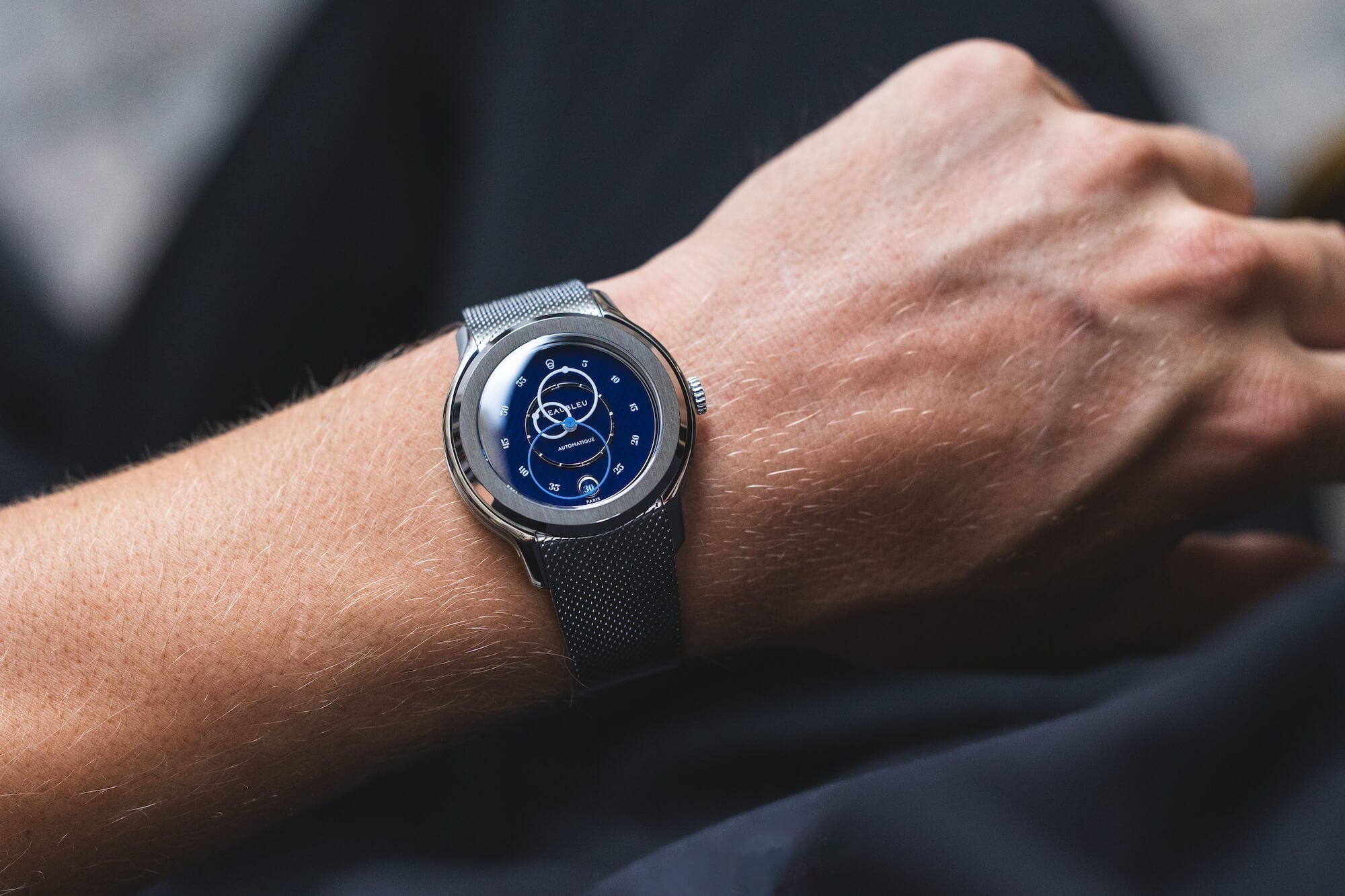
Reassembly: a meaningful gesture
In the age of connected devices and instant gratification, some gestures transcend time without losing their appeal. The automatic winding of a watch is one of these discreet rituals that connects the object to the wearer. Neither a mere technical necessity nor a simple habit, it embodies a particular relationship with time, movement, and mechanics.
In a world where everything is recharged, updated and replaced, reassembly retains an almost symbolic dimension.
Understanding the automatic winding of a watch
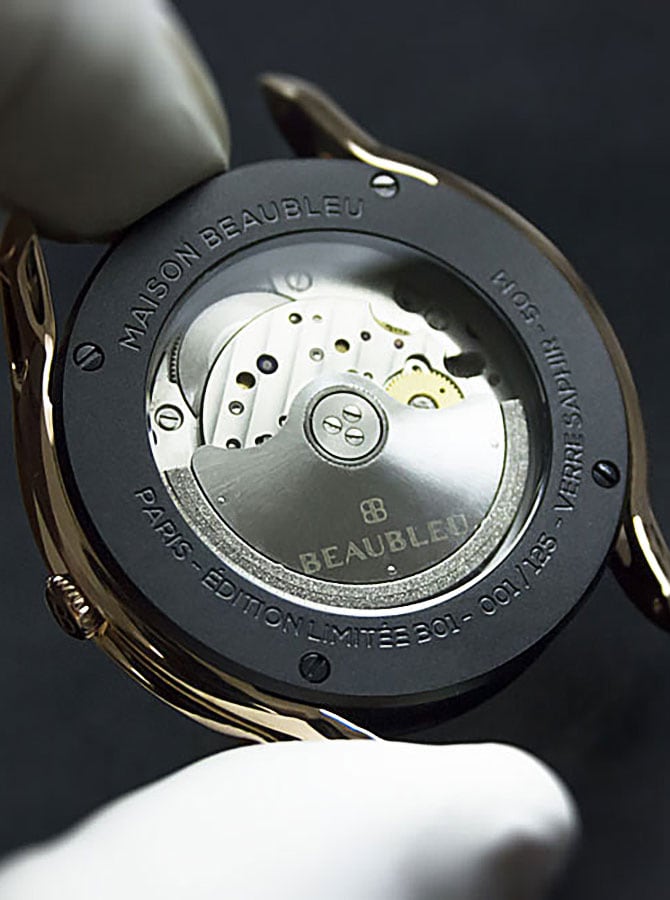
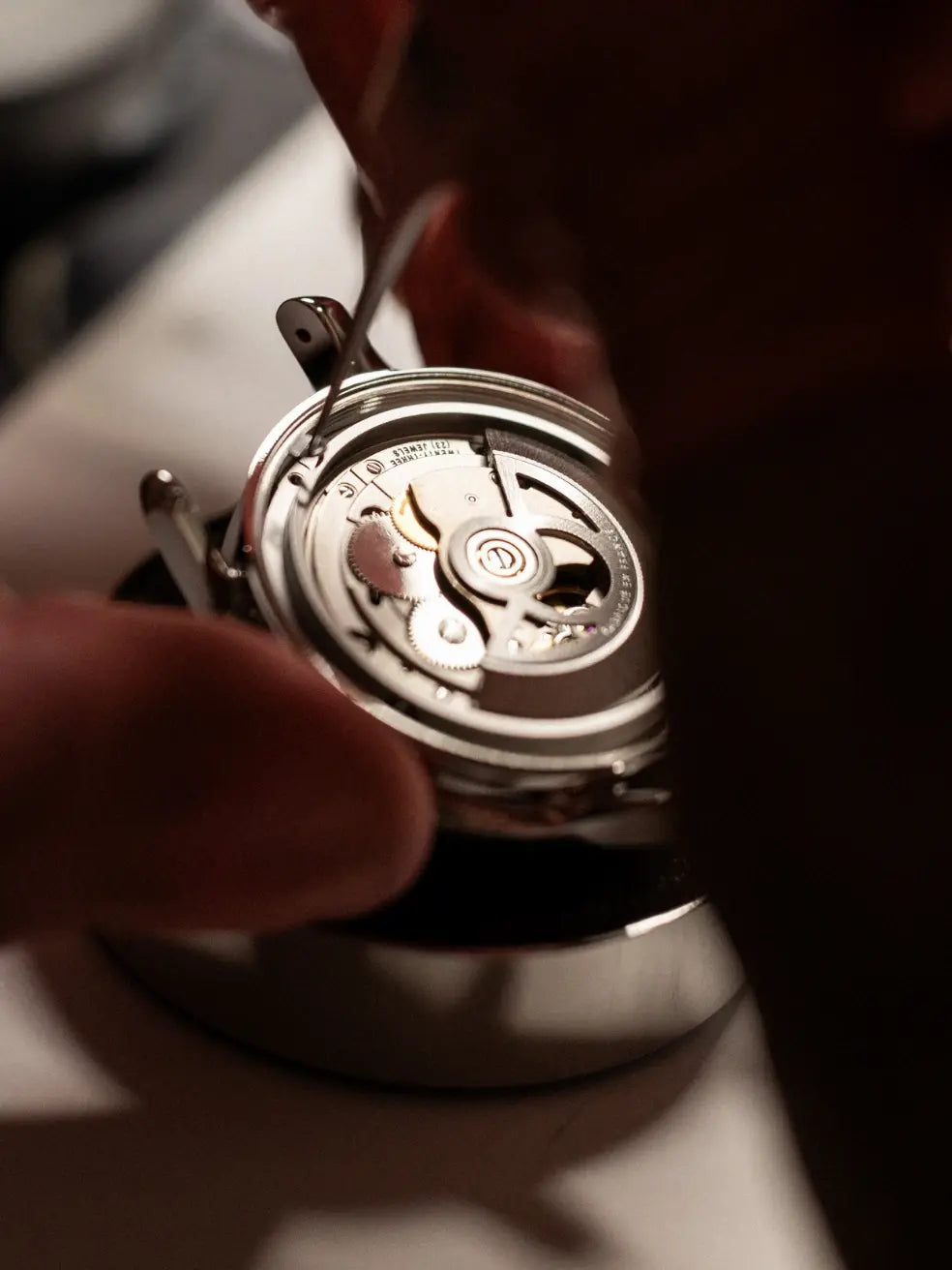
The automatic winding of a watch relies on a simple yet ingenious principle. Inside the case, a rotor oscillates in response to the movements of the wrist. This mechanical energy is transmitted to the mainspring, allowing the watch to function without a battery.
Unlike a hand-wound watch, it is not necessary to wind this watch daily using the crown if it is worn regularly. The action still remains, however, sometimes to restart the mechanism or adjust the time, but it is a matter of continuity rather than necessity.
A direct link between the carrier and the mechanics
What fundamentally distinguishes an automatic watch is the relationship it creates between the user and the object. The watch lives to the rhythm of the wearer. It recharges itself through movement, activity, and presence.
This organic link gives meaning to the watch. The watch is no longer just an instrument for measuring time, but a living mechanism, dependent on simple, everyday gestures.
The return of physical gestures in an automated world
Paradoxically, as technology seeks to eliminate all human intervention, the act of reassembling regains its value. It slows down, imposes a pause, invites attention.
Automatic winding reminds us that precision can arise from mechanical simplicity, without batteries or electronics. This form of autonomy is increasingly appealing to enthusiasts seeking meaning and durability.
A discreet but meaningful ritual
Even though it is less demanding than manual winding, automatic winding remains rich in symbolism. Wearing your watch, putting it down, picking it up again, observing its operation through a transparent case back: all these gestures contribute to the watchmaking experience.
This ritual goes against the grain of fast consumption. It values taking the time to pass on knowledge and understanding of the object.
A mechanism designed to last
Automatic winding relies on tried-and-tested components, designed to function for decades when properly maintained. This longevity is a major factor in the appeal of automatic watch winding, especially compared to electronic devices with limited lifespans.
While technology is constantly evolving, the automatic watch changes little, but subtly improves. It embodies a reassuring form of stability.
The meaning behind the movement
The enduring success of automatic winding also stems from what it conveys. It evokes a different kind of mastery of time, less passive, more embodied. Every movement of the wrist becomes useful, every gesture contributes to the functioning of the object.
This almost philosophical dimension explains why, despite innovations, the automatic watch retains a special place in the watchmaking world.
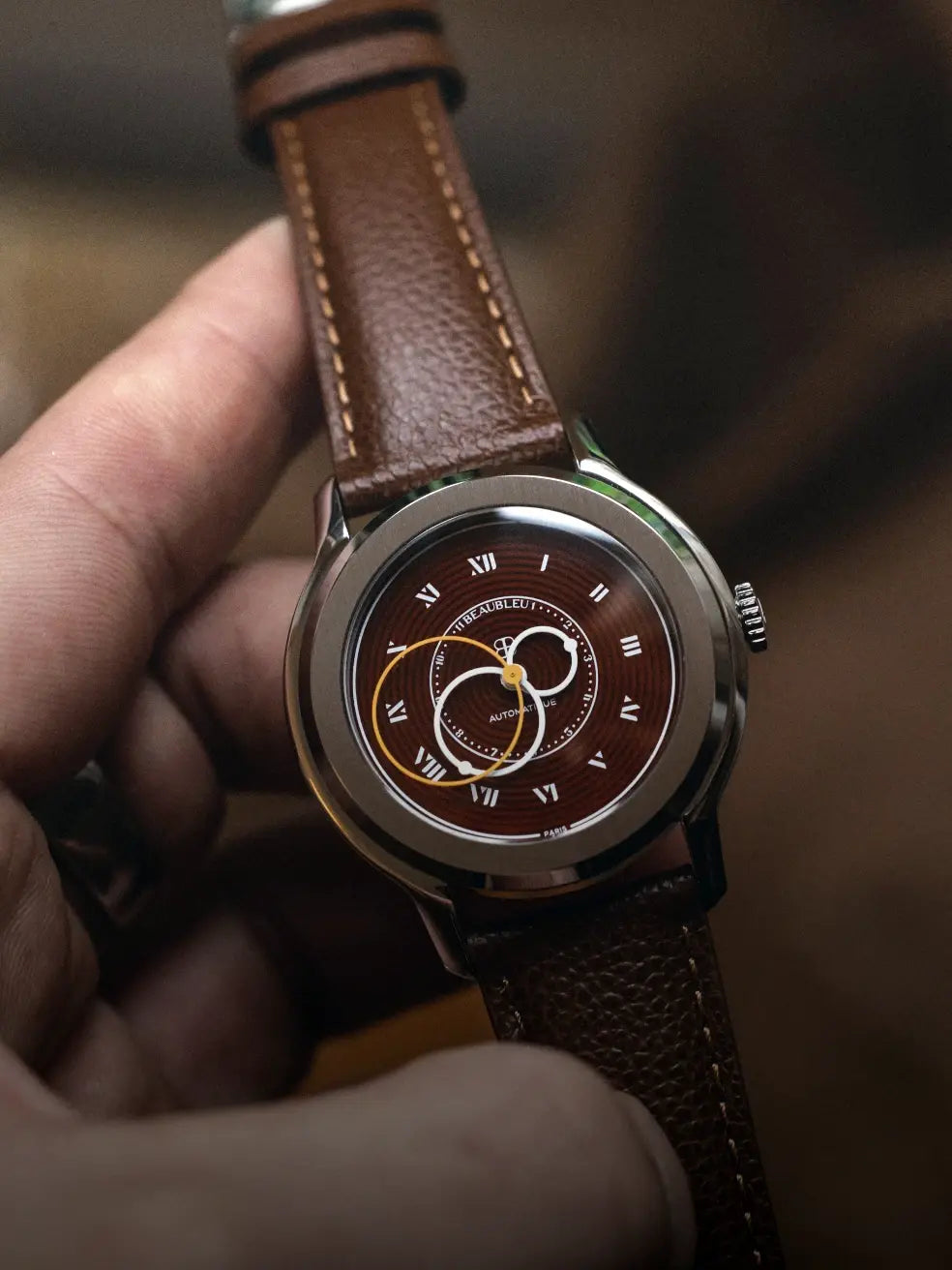
Discover the collections of automatic watches from Maison Beaubleu
The automatic winding of a watch is more than just a technical process. It's a meaningful gesture, a subtle link between mechanics and everyday life, between the object and the wearer. In a world dominated by automation and instant gratification, it reminds us that some mechanisms benefit from remaining visible, understandable, and profoundly human.
More than a function, winding becomes an experience. A simple movement, but full of meaning.