









Leather watch: a discreet presence in literature
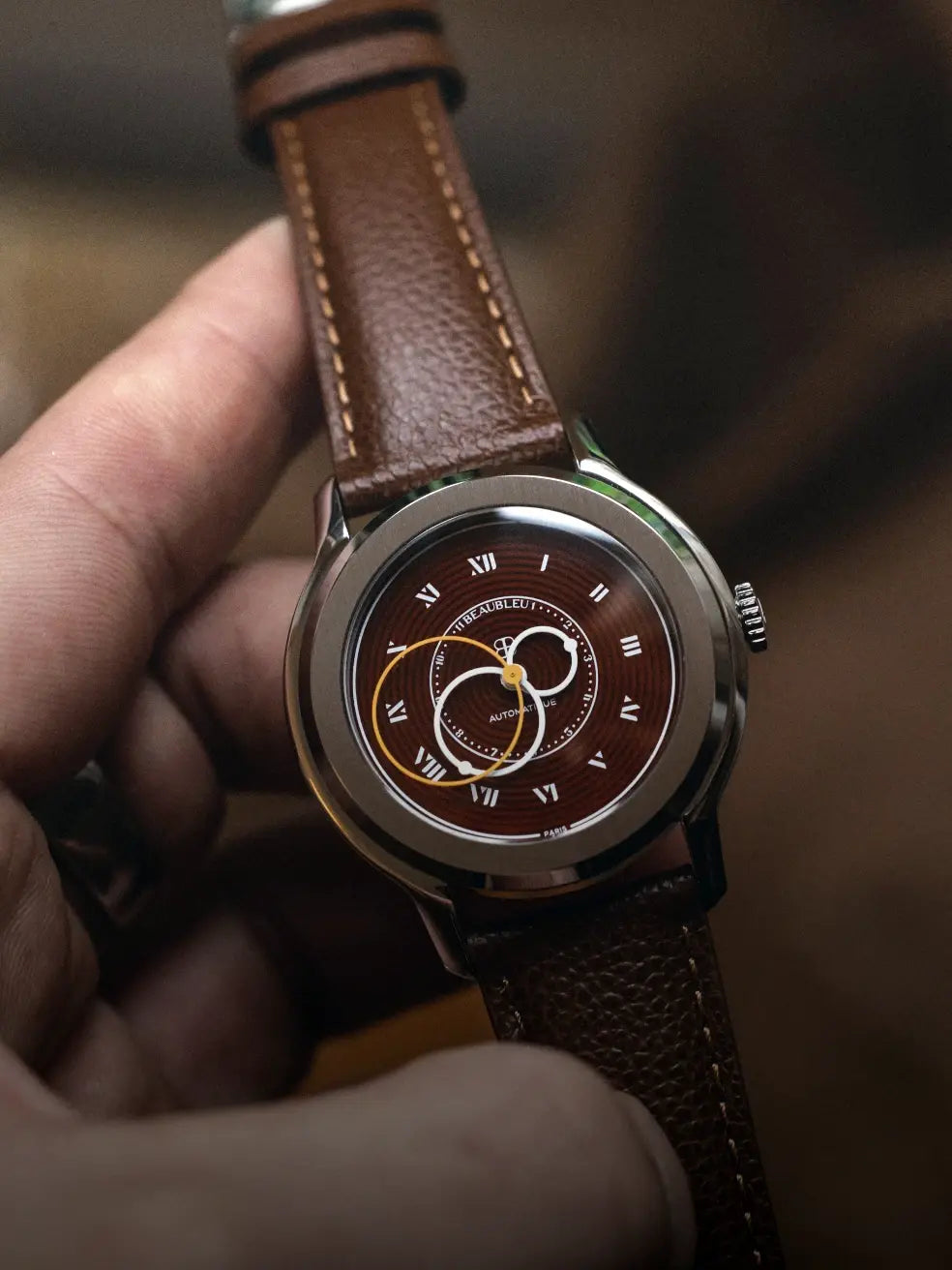
In literature, certain objects permeate works without ever seeking the spotlight. The watch, particularly one with a leather strap, is one such example. It rarely appears as a central motif, but emerges in specific scenes, almost always linked to waiting, discipline, or a keen awareness of the passage of time. When it is mentioned, it is neither decorative nor insignificant. It is a tool, sometimes a burden, often a revealer. The leather watch, with its understated elegance and close connection to the body, naturally fits into this tradition of discreet yet meaningful objects.
The leather watch as a discipline of time in the 19th century
In Stendhal's The Red and the Black, the watch appears in a world where mastery of time is inseparable from social advancement. Julien Sorel, obsessed with order and precision, maintains a close relationship with measuring time. The watch is not described at length, but it is clearly present as an instrument of control, almost a moral imperative. At the time, the watch was a personal object, kept close to the body, often protected by a case or a leather chain. It was not used to show off, but to conform to an ideal of rigor. Its appearance in the narrative always accompanies an inner tension, a need for self-control.
In Émile Zola's Germinal, the watch is explicitly associated with those who set the pace. Engineers and foremen consult their watches to organize the work rhythm, a reminder that time is not experienced in the same way depending on social standing. Here again, the object is not ornamental. It is functional, almost cold. The watch embodies a silent authority. It doesn't need to be displayed: its mere presence is enough to remind us who controls the hours and who is subject to them.
The 20th century: waiting, measuring, enduring
In the 20th century, the watch gradually shifted from a symbol of discipline to one of absurdity and waiting. In Albert Camus's The Outsider, the watch is mentioned in moments when time seems suspended. During the trial, the attention paid to hours, durations, and drawn-out moments becomes almost oppressive. The watch is never valued aesthetically; it is neutral, mechanical, indifferent. It accompanies a character detached from the world, reminding us that time continues to flow even when meaning eludes us.
In André Malraux's Man's Fate, the watch appears in scenes of absolute emergency. It is consulted quickly, almost mechanically, in the heat of the action. It allows one to synchronize, to act, to survive. Here, the watch, whether leather or not, is no longer linked to elegance or status, but to necessity. It accompanies the action without ever hindering it. Worn on the wrist, held by a leather strap, the watch is designed to last, to withstand, to follow the man in action rather than to impose itself on the gaze.
Samuel Beckett's play Waiting for Godot offers a striking counterpoint. The watch is explicitly mentioned in the dialogue, but its function seems devoid of meaning. Time is measured, but nothing happens. The watch exists, but it explains nothing. It becomes almost ironic, reminding us that measuring time guarantees neither the event nor the resolution. Yet the object remains concrete, material, undeniably present.
Discover the models in the Ecce permanent collection
A realistic presence in contemporary literature
In contemporary literature, the watch doesn't disappear. It blends into reality. Annie Ernaux's The Years mentions everyday objects that mark different eras and memories. The watch is part of this intimate and collective landscape. It is there, worn, used, integrated into memory. Its materiality matters less than its permanence.
In Michel Houellebecq's The Map and the Territory, the watch appears as an element of realistic description. It contributes to the characters' social grounding. It is neither idealized nor criticized. It simply exists as a functional, personal object, consistent with a contemporary aesthetic of sobriety.
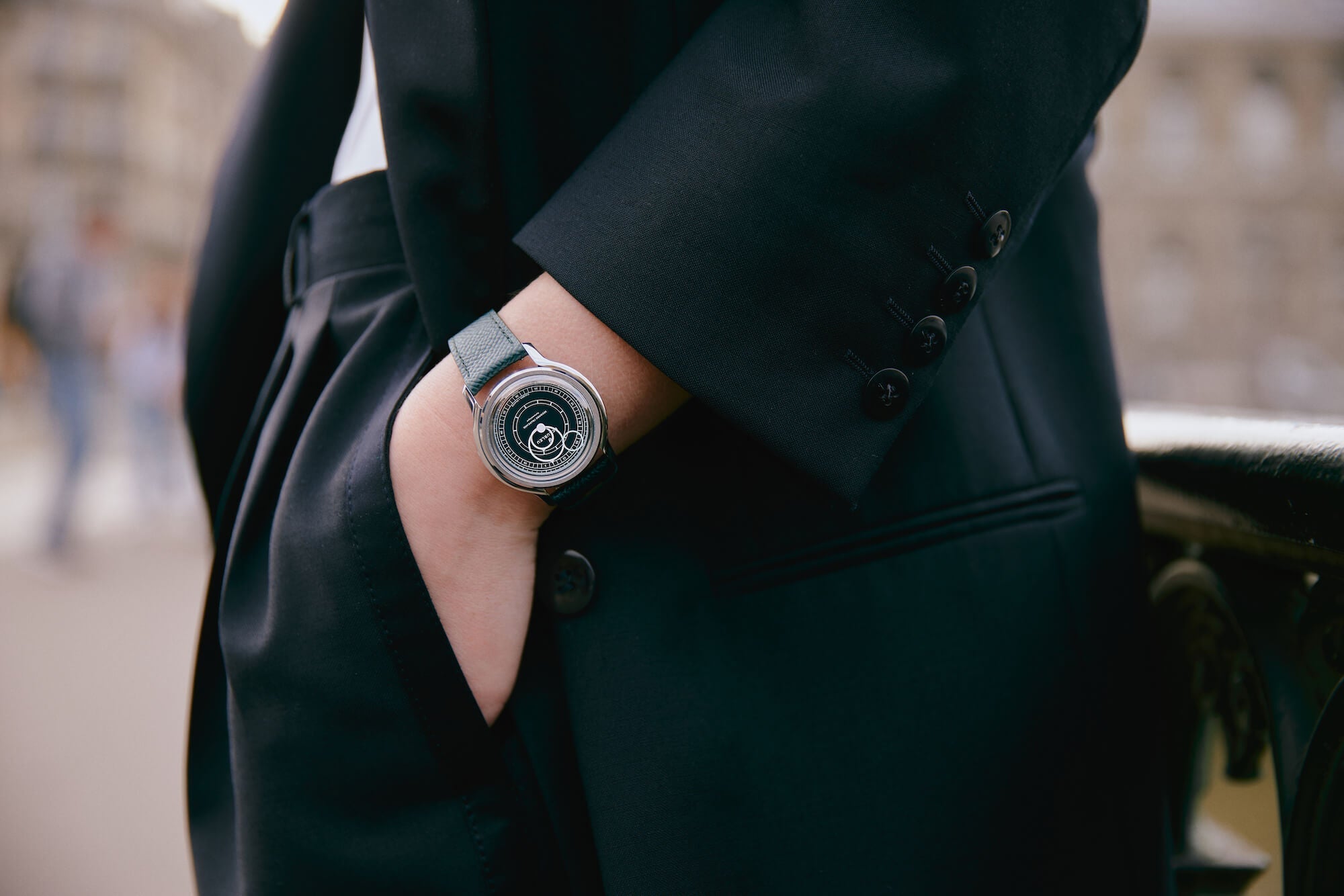
In literature, the leather watch is never a flashy symbol. It appears when time becomes a central issue: waiting, acting, controlling, enduring. Always present in a verifiable and tangible way, it accompanies the characters without entirely defining them. A discreet, almost silent object, it embodies an intimate relationship with time, true to the literary ideal of saying much with very little.